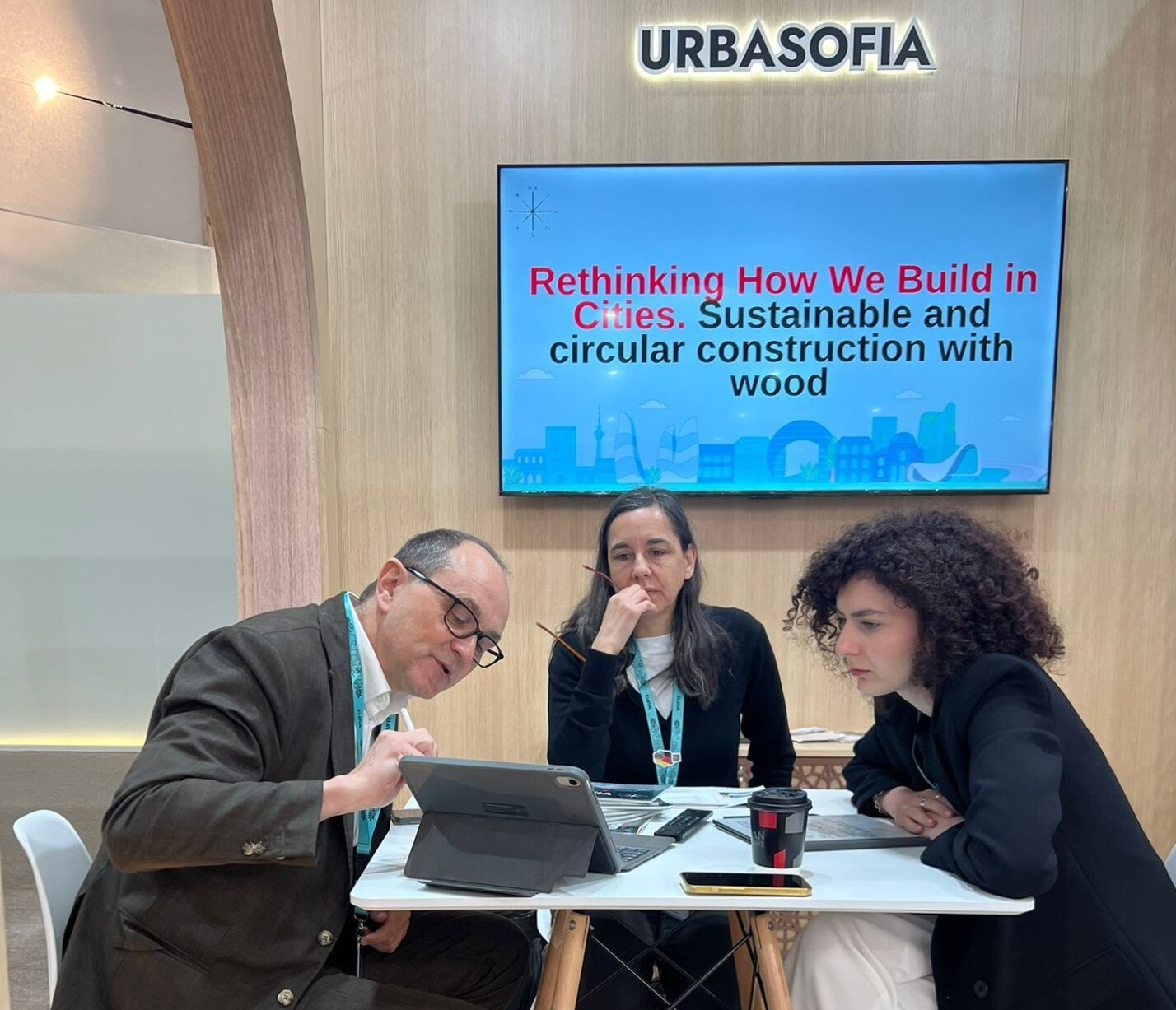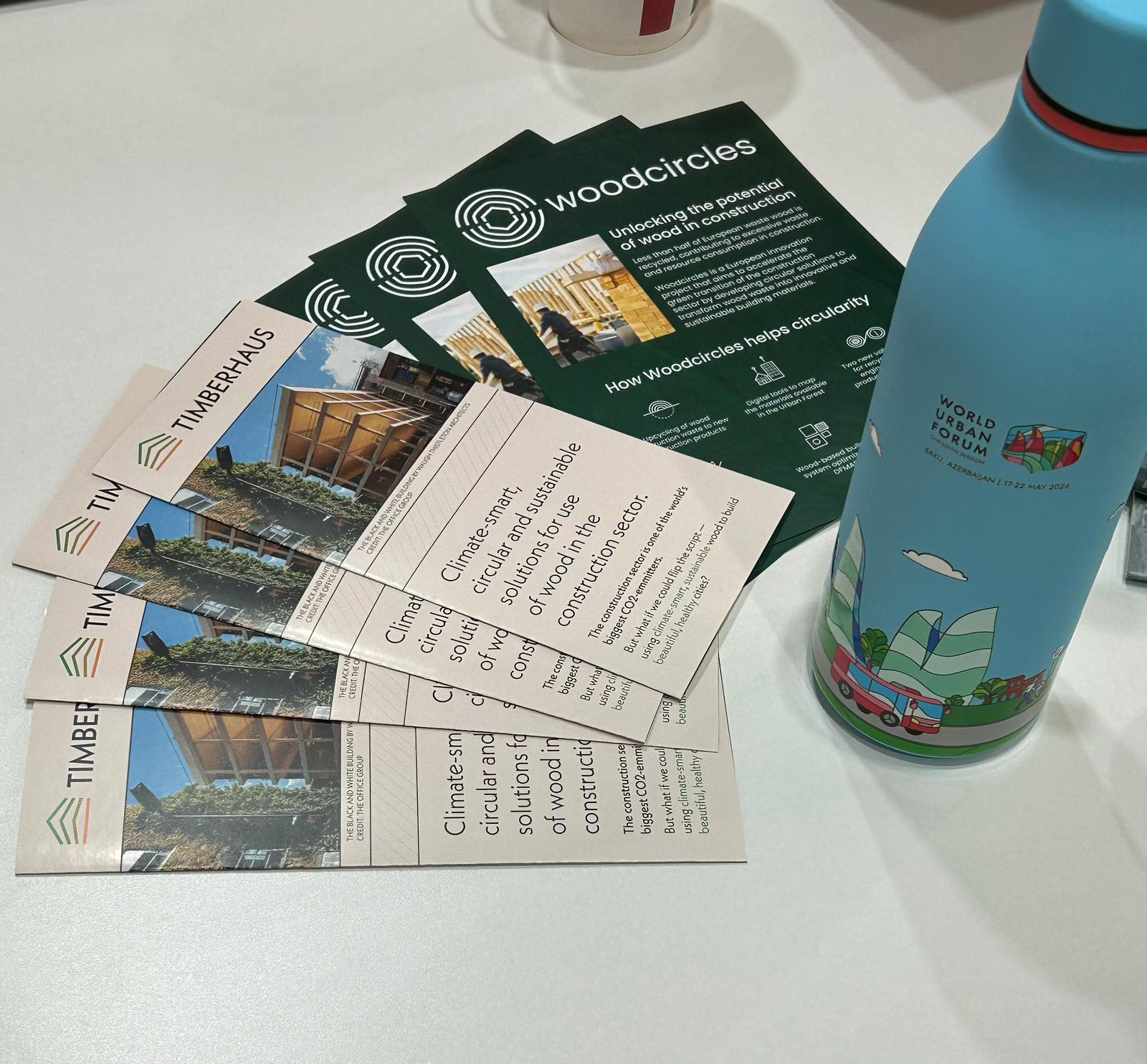


TIMBERHAUS contributed to the global conversation on sustainable urban development at the 13th World Urban Forum (WUF13), where experts and city representatives explored how timber can help shape more climate-friendly, resilient, and affordable cities. The discussion, held together with the fellow project WOODCIRCLES was titled “Rethinking How We Build in Cities: Sustainable and Circular Construction with Wood” and it highlighted the growing role of wood construction in the transition towards a low-carbon built environment.
Representatives from the Senate Department for Urban Development, Building and Housing in Berlin shared valuable insights from the city’s experience in advancing timber construction. Examples included the Berlin School Building Initiative, a modular timber-based programme that has delivered dozens of educational facilities, and the Schumacher Quartier, one of Berlin’s flagship sustainable urban development projects. These initiatives demonstrate how innovative timber solutions can support the delivery of high-quality, affordable housing and public infrastructure while reducing environmental impacts.
The discussion underscored a key principle that also lies at the heart of TIMBERHAUS: successful transformation of the construction sector requires collaboration across public authorities, housing companies, cooperatives, private developers, researchers, and local communities. Current challenges were also addressed, including market readiness, construction costs, and the need to further strengthen the timber construction value chain. At the same time, speakers highlighted the benefits of modular timber construction, including faster assembly, reduced disruption on construction sites, and lower environmental footprints.
These discussions closely align with TIMBERHAUS objectives, wich, through pilot actions in cities including Berlin, Baia Mare, and Siena, aims to demonstrate how timber can contribute to more circular, resource-efficient, and climate-neutral urban development across Europe.
As WUF13 brought together global stakeholders under the theme “Housing the World: Safe and Resilient Cities and Communities,” the event reaffirmed the growing recognition that sustainable wood construction can play a significant role in addressing both the housing challenge and the climate challenge facing cities worldwide.