

About TIMBERHAUS
Climate-smart, circular, and sustainable solutions for use of wood in the construction sector
Project overview
TIMBERHAUS is a European innovation project developing innovative circular solutions for sustainable wood construction.
Wood materials remain considerably underused in the construction sector despite their sustainability benefits and appreciation by end users. At the same time, there is a need to make the construction sector more renewable and circular to decrease the sector’s huge carbon footprint, energy consumption, and waste generation.
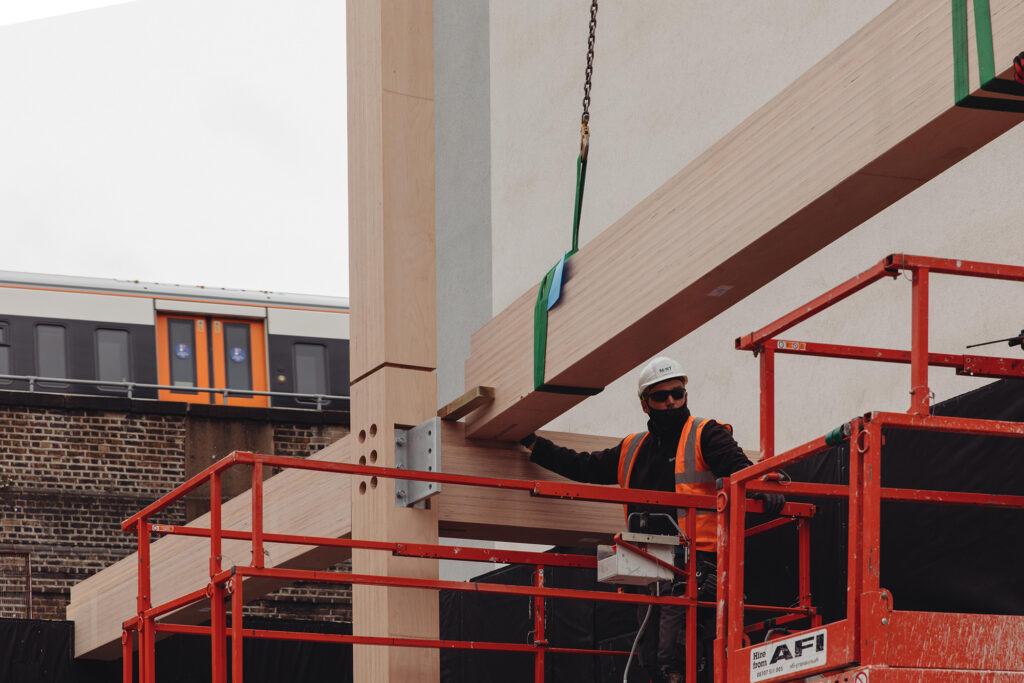
TIMBERHAUS develops solutions for the greater use of timber such as hardwoods and post-consumer wood in the construction sector, while including circularity as part of a broader system and design loop. It employs a holistic multi-actor approach, involving 19 European partners – including 3 European cities – that operate within:
- research
- technology development and application
- manufacturing
- design
- sustainability assessment
- stakeholder management
- and co-creation processes
TIMBERHAUS supports the implementation of the EU Forest Strategy and the New European Bauhaus initiative by making the construction sector more renewable and circular.
Objectives
The ambition of TIMBERHAUS is to develop and deploy wood processing technologies and design solutions to enable the greater use of timber such as hardwoods and post-consumer wood in the construction sector.
TIMBERHAUS’ goals include:
-
New technologies
Development of AI-based wood processing and prototyping technologies
-
Wood use optimisation
Incorporation of underused wood resources and recycled wood in the wood construction value chain
-
Validation
Documentation of technical performance of developed prototypes
-
Demonstration
Showcasing of the developed solutions in European partner cities
-
Wood building blueprints
Design of wood building blueprints integrating reuse, recycling, adaptability, and deconstructivity
-
Design for well-being and cultural traditions
Integration of local cultural traditions, design languages, as well as human health and well-being aspects as integral elements of the built space
-
Wood supply and construction demand
Generation of knowledge about limits and opportunities for local and global wood supply in relation to expected construction demand
-
Carbon removal benefits
Development of methodologies to quantify the carbon removal benefits of wood construction products
-
Decarbonisation strategies
Development of decarbonisation strategies for the built environment with European partner cities
-
Co-creation
Engagement with stakeholders in European partner cities through co-creation processes
Focus areas
TIMBERHAUS organises its activities into three integrated focus areas:

Product development and design
Development of material-based solutions for new raw material resources and secondary materials, and subsequent development of design-based solutions to integrate the product-based solutions at building level
Documentation and demonstration
Documentation, validation and demonstration of the developed solutions, comprising both technical, design, and sustainability aspects
Co-creation and deployment
Local co-creation and deployment of TIMBERHAUS solutions involving local stakeholders and communities of practice in the partner cities Berlin, Baia Mare and Siena
Expected outcomes
TIMBERHAUS will contribute to the following EU-defined expected outcomes including:
-
Enhanced contribution of the forest-based sector with respect to climate change mitigation
-
Pathways for conversion of solid biomass into forms of long-term carbon storage
-
Enhanced contribution of the forest-based sector to decarbonisation strategies for buildings
-
Contribution to a robust and transparent methodology to quantify the climate benefits of wood construction products and other building materials
-
Increased resource efficiency and minimisation of environmental footprint of wood construction products
-
Better knowledge about the quantitative limits and opportunities of wood supply